
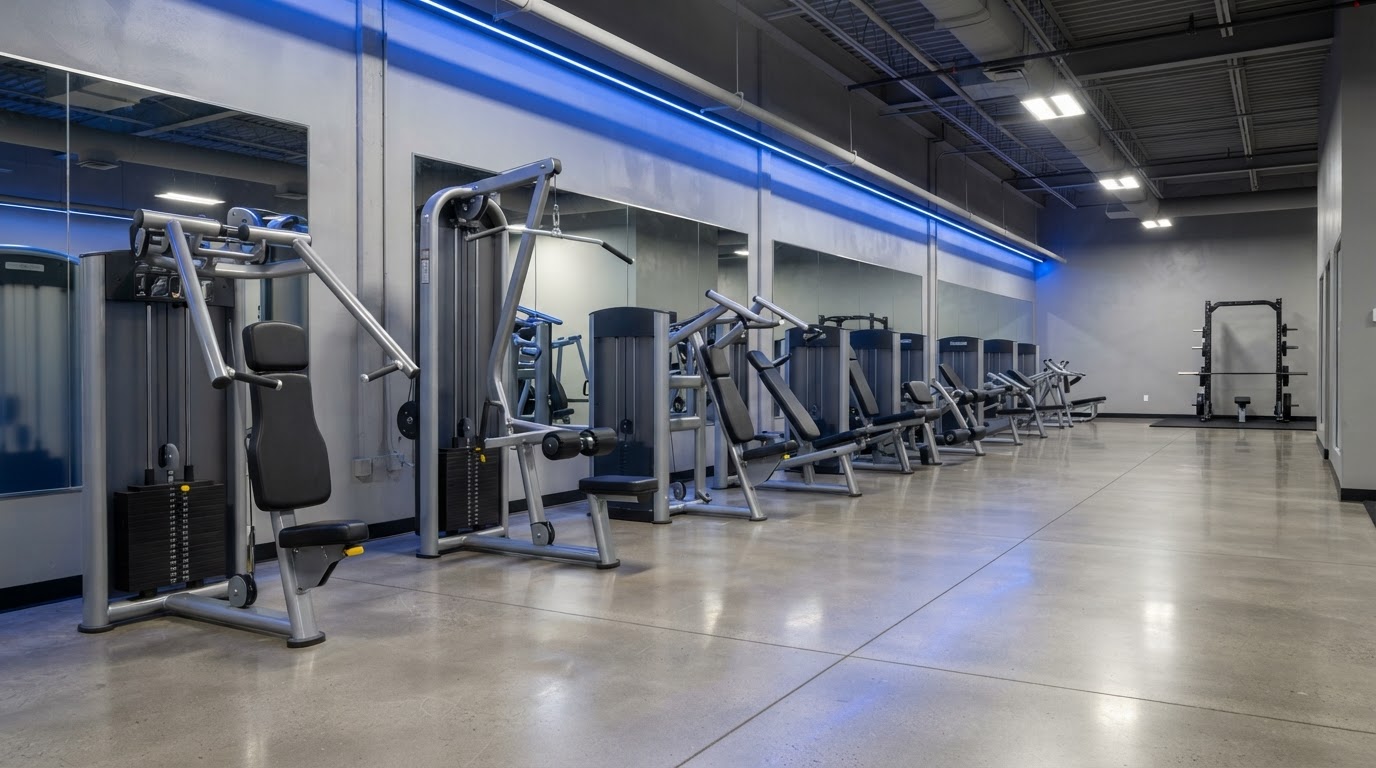
Identifying Affordable Gyms in Your Area
An affordable gym near you is one whose total cost fits your budget and whose offering fits your training, not merely the club with the lowest sign on the door. Start by listing every club within your practical radius, including chains, independents, community recreation centers, and Y facilities. Community centers often undercut commercial gyms on price while offering pools and courts that chains charge extra for. Gather the advertised monthly rate for each, but treat it as a starting figure, because the real comparison happens once you add fees and confirm what is included.
Value Indicators Beyond the Monthly Rate
Several signals reveal whether a low rate represents value or a trap. Equipment ratio matters: a club with two squat racks for three hundred members is not a bargain at any price. Hours tell you whether the rate buys access when you need it, since a cheap 24/7 club beats a pricier club that closes before your shift ends. Cleanliness and maintenance reflect how the club spends your dues. Staff knowledge and turnover hint at culture. A gym that invests in upkeep, retains staff, and posts clear fee schedules usually delivers better long-term value than the absolute cheapest option.
Equipment and Cleanliness at Budget Clubs
Visit any affordable gym you are considering during your real training window and inspect the things that affect daily use. Are the benches torn, the cables frayed, the weights organized or scattered? Is there a wipe station near each area, and do members actually use it? Check the locker rooms and showers, because a clean facility signals management that respects members. Test one machine from each category you care about, cardio, selectorized strength, and free weights, to confirm it works. Affordable should never mean broken or unsanitary.
Membership Tiers Within a Single Club
Many affordable gyms use tiered pricing inside one building, and the advertised rate often describes the base tier. Higher tiers unlock all locations, premium classes, guest privileges, or recovery amenities. The question is whether your routine needs the upgrade. If you train at one club, use only the standard equipment, and never bring guests, the base tier is the affordable choice. If you travel, want pool access, or train across multiple sites, a mid tier may cost less than paying drop-in fees elsewhere. Map the tier features to your actual habits before paying up.
Building a Shortlist and Deciding
Narrow your list to two or three clubs that pass the location, equipment, and cleanliness tests, then request a guest pass at each. Train at your usual time and pay attention to crowding, wait times, and how the space feels. Compare the total first-year cost, including fees, for the finalists. Choose the club that balances cost and usability for your life, not the one with the most features. The most affordable gym near you is the one you visit consistently without dreading the experience or the bill.
Frequently Asked Questions
How do I know if a cheap gym near me is a good value?
Check equipment ratios, hours, cleanliness, and fee transparency. A low rate with broken gear or hidden fees is not a value, so tour the club at your training time before joining.
Are community recreation centers cheaper than commercial gyms?
Often yes. Many community centers and Y facilities offer pools and courts at lower monthly rates than commercial chains, though hours and equipment vary.
Should I pay for a higher membership tier at a budget gym?
Only if you use the extras, like multiple locations, premium classes, or pool access. If you train at one club with standard equipment, the base tier is usually the affordable choice.